Hill Center launched its new public affairs discussion series, At Issue in April. The series examines the many critical issues we are faced with today.
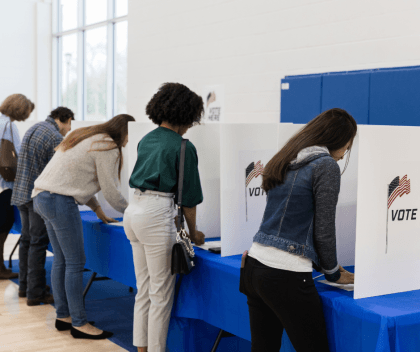
Fact: voter fraud almost never happens in the United States. In ramping up election attacks, will the Trump administration throw the midterms into disarray? David Becker notes that “this administration has gone out hunting for fraud with all of the tools of the federal government over the last year and they have found virtually none.” Yet, as Matt Cohen reports. “The signs that Trump will try to intervene are too many and too big to ignore: the FBI raiding an election hub for 2020 ballots in a key Georgia county; an unprecedented effort by the U.S. Department of Justice to obtain private voter data from every state, and the GOP’s all-in push to pass new voter suppression laws. Perhaps most worryingly: Trump has openly said the federal government out to wrest control of elections from the states and take control of voting.” And Nick Corasaniti has recently reported that “Facing the possibility of big losses for Republicans in the midterm elections, President Trump has reiterated his unfounded assertions of electoral fraud. He has also begun speaking of the need to “nationalize” elections, and for Republican officials to “take over” voting procedures in parts of the country. This rhetoric is often vague, coming across as a hint of plan, rather than an actual one. But a map of potential targets may be coming into focus and includes the swing states Michigan, Georgia, North Carolina and Arizona. Voting experts, government officials and others have identified a host of conditions that could make those places ripe for meddling from the Trump administration or its allies.”
Steps to limit potential interference in the 2026 midterms by the Trump administration are focusing on legal challenges, state-level protective legislation, and contingency planning by local election officials.

David Becker is the founder and executive director of the Center for Election Innovation & Research, a nonpartisan nonprofit supporting election officials and bolstering trust in election systems. He has more than 25 years of experience in elections, having served as a senior attorney with the U.S. Department of Justice Voting Section in both the Clinton and George W. Bush administrations. Before founding CEIR, David also led the elections team at The Pew Charitable Trusts. In his role as executive director, David oversees the Election Official Legal Defense Network, and he is co-author of ‘The Big Truth: Upholding Democracy in the Age of the Big Lie.’

Matt Cohen is a Senior Reporter at Democracy Docket where he covers voting rights, right-wing extremism, and threats to democracy. He previously covered these beats as an investigative reporter at Mother Jones and The American Independent. Before that, Matt covered local politics, social issues, and arts at the Washington City Paper and DCist.
 Nick Corasaniti covers voting, democracy and other election-related issues. for The New York Times. He also focuses on local races in state legislatures, cities and county boards, the kind of elections deeply connected to the functioning of American democracy. He has been covering elections — presidential, congressional, gubernatorial, mayoral, legislative and local campaigns — for The Times since 2011.




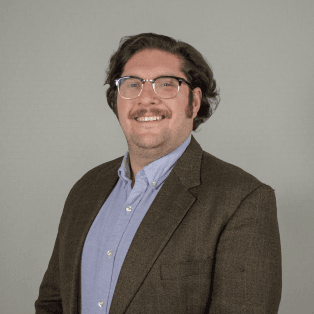 Matt Cohen is a Senior Reporter at Democracy Docket where he covers voting rights, right-wing extremism, and threats to democracy. He previously covered these beats as an investigative reporter at Mother Jones and The American Independent. Before that, Matt covered local politics, social issues, and arts at the Washington City Paper and DCist.
 Nick Corasaniti covers voting, democracy and other election-related issues. for The New York Times. He also focuses on local races in state legislatures, cities and county boards, the kind of elections deeply connected to the functioning of American democracy. He has been covering elections — presidential, congressional, gubernatorial, mayoral, legislative and local campaigns — for The Times since 2011.