
- This event has passed.
Iranian Journalist Fatemeh Jamalpour discusses her new book For The Sun After Long Nights: The Story of Iran’s Women-Led Uprising
This event has passed
“Personally driven, historically necessary, and politically salient.” —Kirkus Reviews
Fatemeh Jamalpour will be in conversation with Holly Dagres, Senior Fellow The Washington Institute
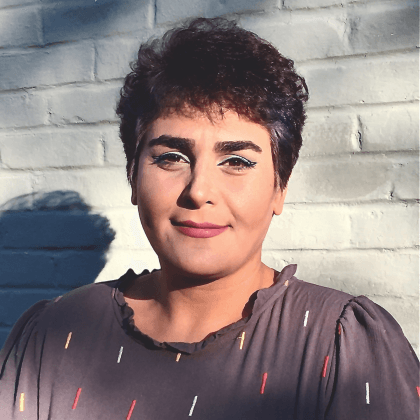
Fatemeh Jamalpour is a feminist journalist banned from working in Iran by the Ministry of Intelligence. Jamalpour has worked as a freelance reporter for outlets such as The Sunday Times, The Paris Review and the Los Angeles Times, and has also held positions at BBC World News in London and Shargh newspaper in Tehran. She has two master’s degrees in journalism and communication from Northwestern University and Allameh Tabatabaei University in Tehran and was a 2024-25 Knight-Wallace Fellow at the University of Michigan.
Holly Dagres is a senior fellow at the think tank, The Washington Institute. She is also the curator for the popular weekly newsletter, The Iranist, on Substack. Holly is Iranian-American and spent her formative years in Iran.
For The Sun After Long Nights, co-authored by Nilo Tabrizy, is a moving exploration of the 2022 women-led protests in Iran, as told through the interwoven stories of two Iranian journalists. In September 2022, a young Kurdish woman, Mahsa Jîna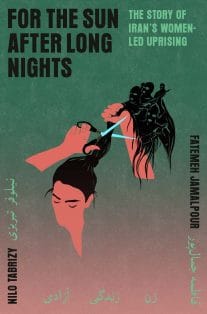 Amini, died after being beaten by police officers who arrested her for not adhering to the Islamic Republic’s dress code. Her death galvanized thousands of Iranians – mostly women – who took to the streets in protest in one of the largest uprisings in the country in decades: the “Woman, Life, Freedom” movement. Despite the threat of imprisonment or death for her work as a journalist covering political unrest, state repression, and grassroots activism in Iran—which has led to multiple interrogation sessions and arrests—Fatemeh Jamalpour joined the throngs of people fighting to topple Iran’s religious extremist regime. Across the globe, Nilo Tabrizy, who emigrated from Iran with her family and was raised in Canada, was covering the protests and state violence in Iran, knowing that spotlighting the women on the frontlines and the systemic injustice of the Iranian government meant she would not be able to safely return to Iran in the future. Though they had met only once in person, Nilo and Fatemeh corresponded constantly, often through encrypted platforms in order to protect Fatemeh’s privacy and security. As the protests continued to unfold, they shared what led them to embark on an effort to document the spirit and legacy of the movement, and the history, geopolitics, and influences that led to this point. At once deeply personal and assiduously reported, For the Sun After Long Nights offers two perspectives on what it means, as a journalist, to cover the stories that are closest to one’s heart—both from the frontlines and from afar.
The title FOR THE SUN AFTER LONG NIGHTS, originates from the song “Baraye” by Shervin Hajipour which went viral online and became a protest anthem for the movement in 2022. Hajipour is currently serving a three year and eight-month sentence for “encouragement to protest.” His story embodies how poetry, a pillar of Iranian culture, has historically been used for political commentary. This memoir follows that same tradition of using art as a form of self-expression and a political vessel.
Books will be available for sale. A book signing will follow the discussion.
Fatemeh Jamalpour photo credit: Joan Susie