Hill Center has always been a place worth showing up for. Lately, we've been making…
Jim Thomson and his “Global Sounds on the Hill” at Hill Center
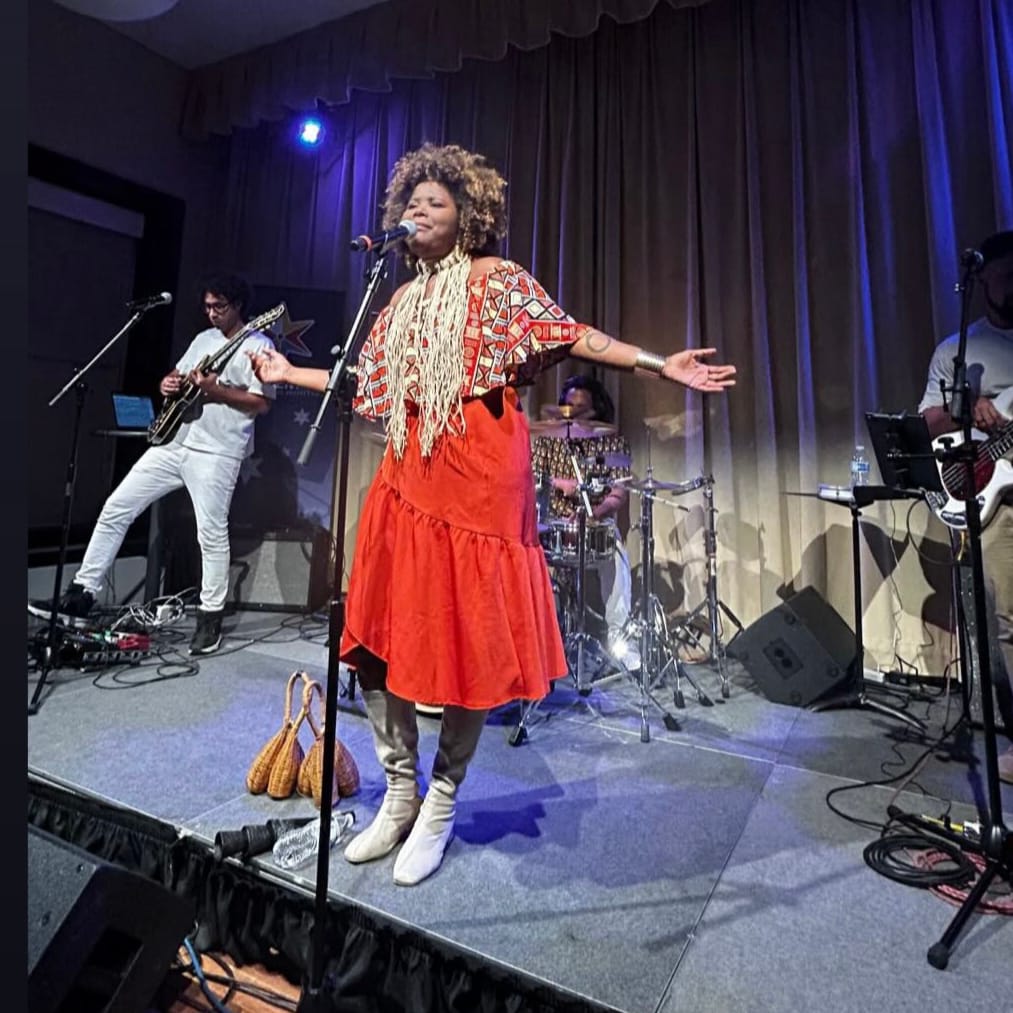
After singing an upbeat verse in Portuguese over a funky rhythmic bottom from her band, vocalist Luciane Dom chanted in English “We’re in Brazil right now,” and reached out to grab the hands of audience members who were enthusiastically standing up and dancing with her. The Rio de Janeiro based Dom was not actually in Brazil — she was in an intimate 100 seat room at Hill Center at the historic old Naval Hospital on Pennsylvania Avenue in southeast Washington D.C. at a “Global Sounds on the Hill” concert curated by Jim Thomson. The energy of the music and the appreciative listeners seemed to remind the singer of being with music lovers in her home country. It is also a typical scene at one of Thomson’s shows: the music from other countries he brings to the Center often inspires audience members to move their feet as they feel the rhythms of these countries.
Luciane Dom
Thomson, a D.C. resident, promoter, DJ, and drummer who grew up in Virginia, has been booking the unique series at Hill Center since 2015. D.C. drummer Brendan Canty, a former curator at Hill Center, and best known for being in the band Fugazi, first brought Thomson in to work with him. Canty eventually moved on, but Thomson stayed. Through his work at the Center, Thomson has introduced to D.C. the Colombian salsa group Las Guaracheras, New York City based Moroccan group Innov Gnawa, Ethiopian band Qwanqwa, India’s Merasi Musicians of Rajasthan, Zimbabwe afropop band Mokoomba, Burkina Faso’s Baba Commandant and the Mandingo Band, Indigenous Guatemalan singer Sara Curruchich, and many others.
Las Guaracheras
Thomson’s bookings may seem unconventional compared to American and UK English language pop music acts, but the bands he recruits share a common trait: they make jubilant, rhythmic music that propels many in the audience to get up out of their seats to enjoy it. Hill Center does include plenty of chairs for those who want to sit, but that does not stop attendees who wish to dance from getting up and finding a space to do so.
No matter the artist, genre, or home locale of the performers, Thomson keeps his introductions short and simple – he prefers to just let the music do the talking.
Since moving to D.C. in 2013, Thomson has also booked a varied roster of bands and DJs at the now defunct U Street NW Tropicalia club and presented international groups at various other clubs around town, and at free shows in association with several organizations including the Friends of the Mt. Pleasant Library group. As a drummer, Thomson has played with a number of D.C.-based groups, including the now-defunct Time is Fire, and his current group the MFers JMB & Co. He also DJs eclectic music sets on vinyl under the name Crown Vic in a number of D.C. bars and restaurants, books US tours for some artists including an earlier stint with Mdou Moctar’s first two American jaunts, and has his own record label, Electric Cowbell Records. Regarding his decades of drumming, Thomson says he always “feels better after playing music.” He began DJing, he says, as a way to share his distinctive record collection with others. All of his creative efforts seem designed to make available to the public the entertaining, idiosyncratic music he is passionate about.
Thomson says his interest in global sounds comes from his own punk rock background. When rock groups like the Clash, Public Image Ltd., and Sun City Girls were incorporating international music elements into their repertoire, it sounded strikingly mysterious and impressive to him. “Even Adam & the Ants had those Burundi drum rhythms,” Thomson says. Listening to those groups he says “got me going to the world music section in a store and finding some weird stuff. Following that line and then having a record collection that reflects that and then sharing that. That turned into programming.” Regarding the pros and cons of being associated with “world music,” or “global music,” Thomson says, “People like to have a way to categorize you and I don’t want to be bound to a niche, but at the same time for certain things like marketing considerations, you need to work a niche a little bit. So, I think it’s confining sometimes but it’s also useful sometimes.”
Thomson got his start in music in the 1980s when he began drumming for the costume-wearing, humor-tinged, over the top metal band Gwar when he was a student at Virginia Commonwealth University in Richmond, Virginia. Interested in playing a variety of sounds, Thomson moved on to playing drums with the fast-tempoed, noisy, jazz-accented instrumental rock band Alter Natives who released albums on the acclaimed California independent label SST Records. Thomson has played with a number of bands since then including being a founding member of of the Richmond, Virginia salsa band Bio Ritmo. He also began his career booking bands in Richmond including promoting a gig with legendary D.C. Black punk band the Bad Brains, and a number of events there with avant-garde New York musicians.
In 2012, Oliver Conan, who runs the global music Brooklyn-based club Barbes, and Thomson began doing an annual showcase event of non-rock bands in New York City that they called Secret Planet. This showcase occurred at the same time as the Association of Performing Arts Professionals (APAP) conference that brings event bookers to New York City. Thomson, who had in recent years had been doing events under the moniker Multiflora, is now doing shows as Secret Planet DC and is part of a Secret Planet consortium of promoters who try to get gigs for international rhythm acts in places like State College, Pennsylvania; Pittsburgh, Philadelphia, Northampton, Cape Cod, D.C., Baltimore, and New York City.
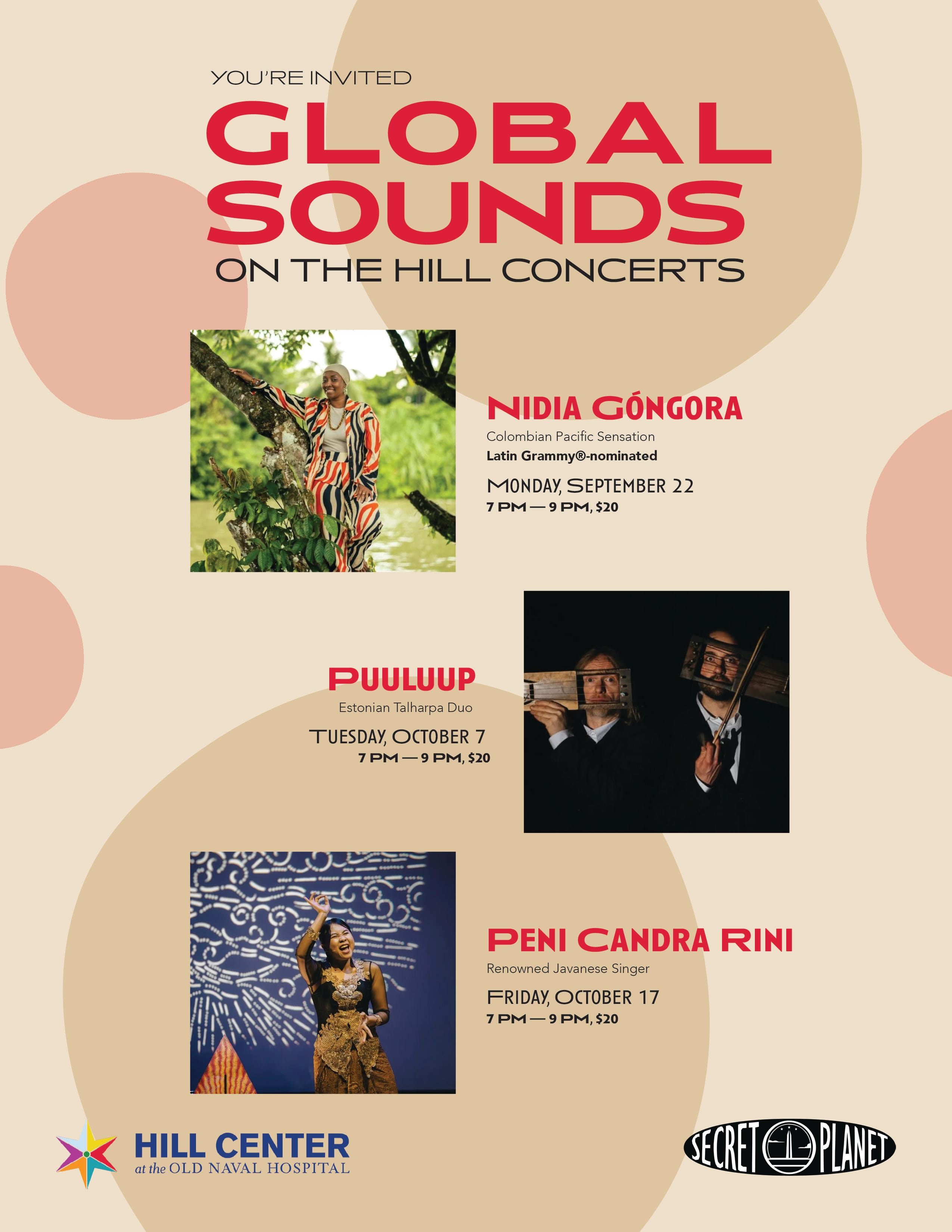
Thomson acknowledges that he and his promoter colleagues are nervous about the cutting of National Endowment for the Arts grants, and proposed changes to immigration laws, but he still has distinctive shows scheduled. These include the following at the Hill Center:
- Colombian Pacific sensation, Latin Grammy-nominated vocalist Nidia Góngora on September 22
- Estonian band Puulup who utilize both traditional stringed lyres and modern electronics and effects devices on October 7
- A return appearance by powerful Indonesian singer Peni Candra Rini on October 17
Thomson is proud of how he has curated music events for ten years at Hill Center, but he humbly prefers to express his fervor for the inspirational talents of the artists themselves. He treasures that without a large marketing budget, and in a part of the nation’s capital less known for live music offerings, he’s been able to showcase these skilled performers and helped put Hill Center, in a restored 1860’s era building, a mere six-minute drive from the US Capitol, on the map for D.C. area music fans.
Written by Steve Kiviat. Steve Kiviat is a dc area resident and longtime music journalist. He has contributed to the Washington City Paper, the Washington Post, and other publications. He also posts a self-curated DC area concert calendar.
Videos Credit: Tony Fowler.

Related Posts