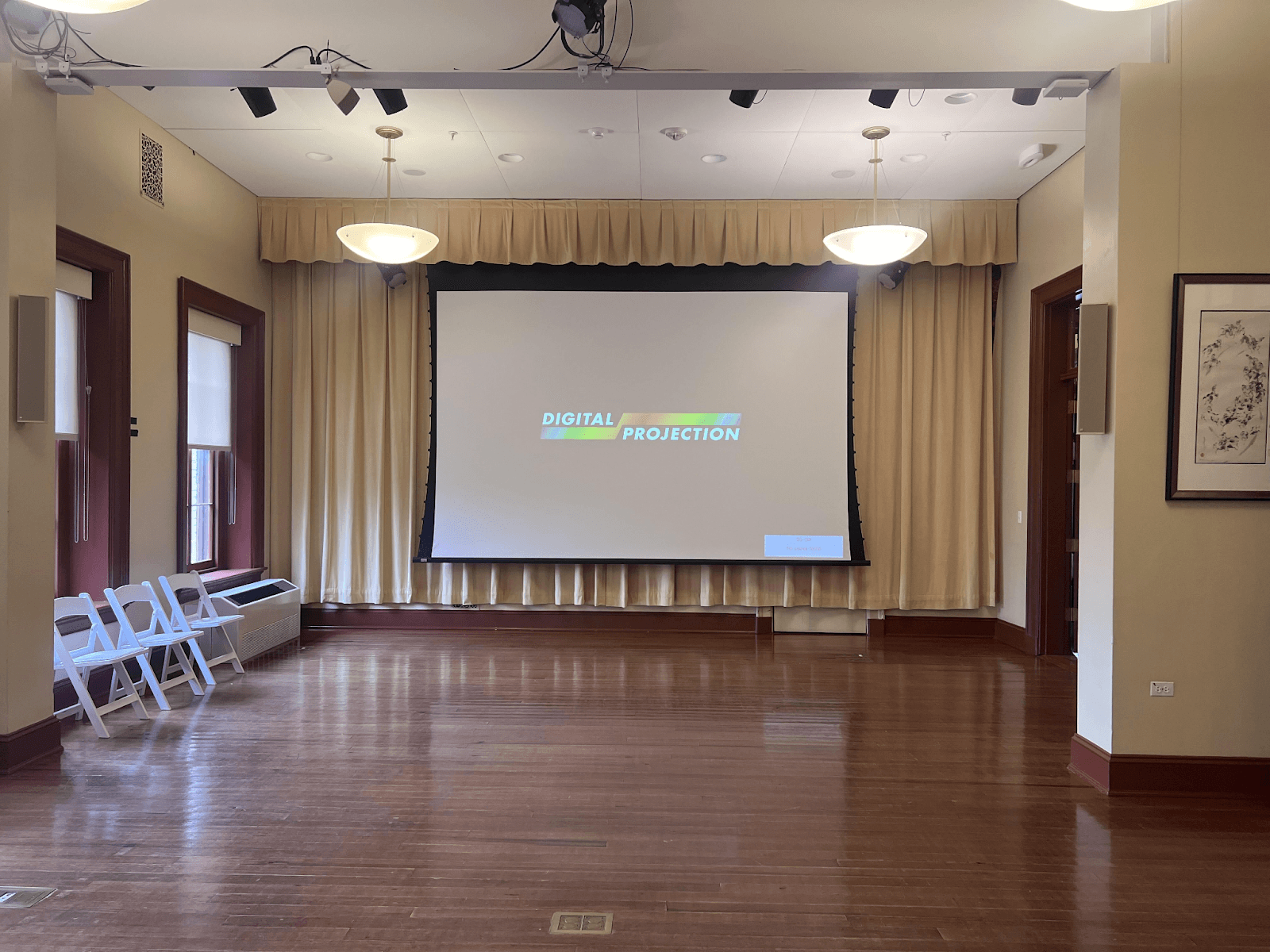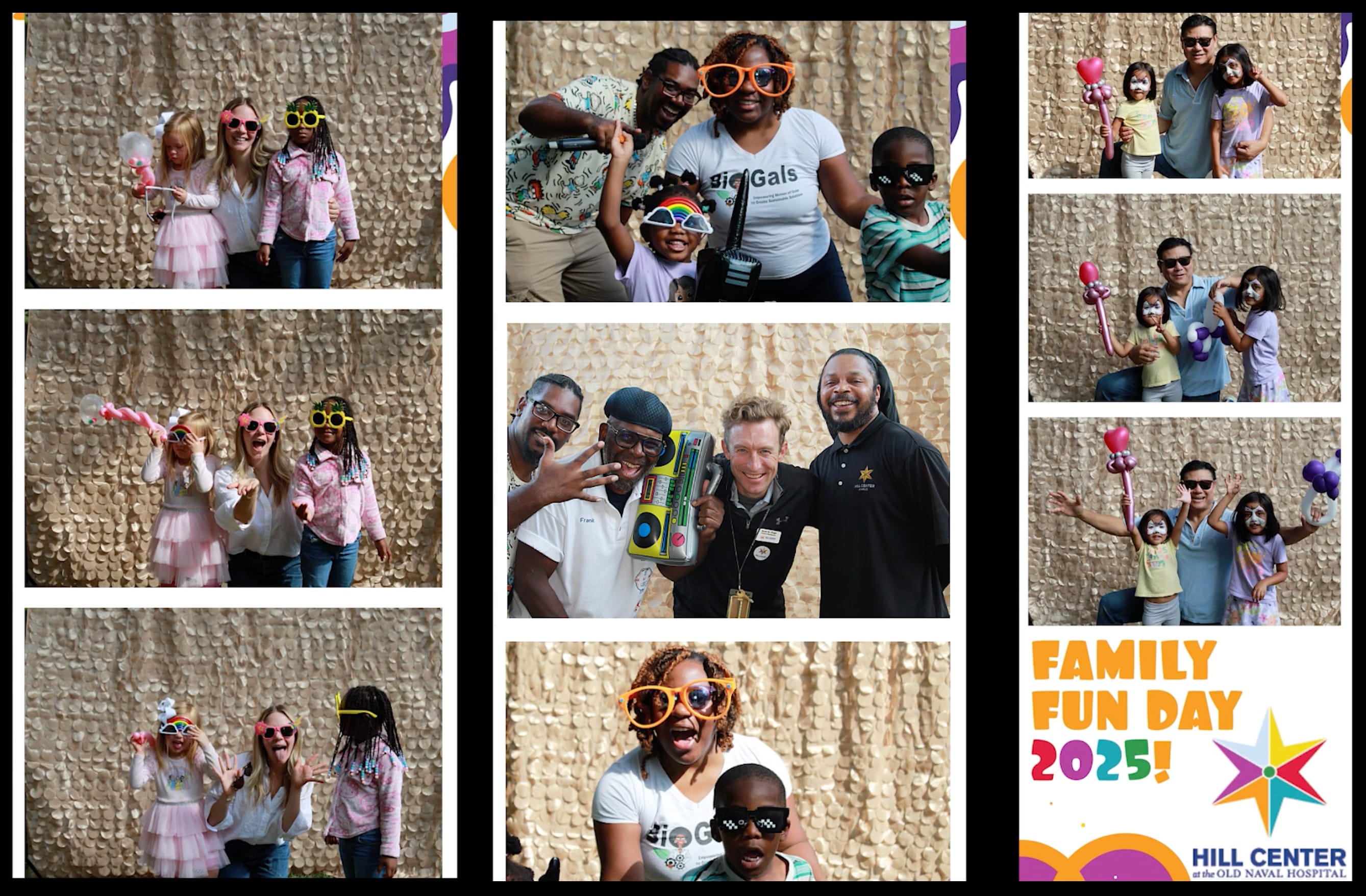
Over the last year, Hill Center has had a complete overhaul of its audiovisual equipment! Long gone are the days of wheeling in a dim projector for your conference; Hill Center now has a 10k laser projector mounted to the ceiling of Abraham Lincoln Hall, its largest room, with a floor-to-ceiling screen to match. Each of its main halls- Abraham Lincoln Hall, John Philip Sousa Hall, and Benjamin Drummond Hall- is equipped with a screen, projector, & sound system that has been used for extravagant birthday bashes, film screenings, and high-level conferences.
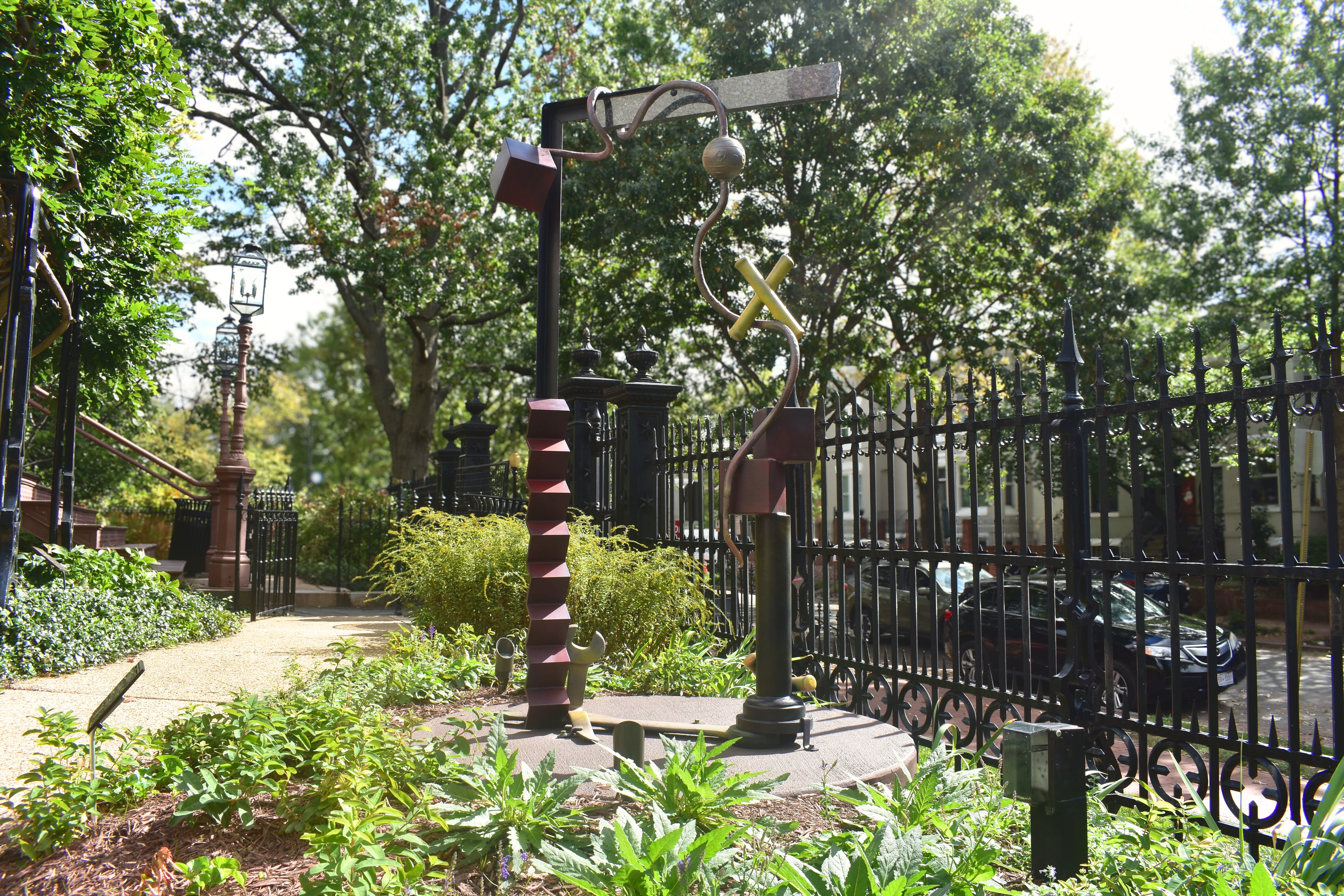
Outdoor Sculpture Exhibition 2025 Winner and Opening Reception
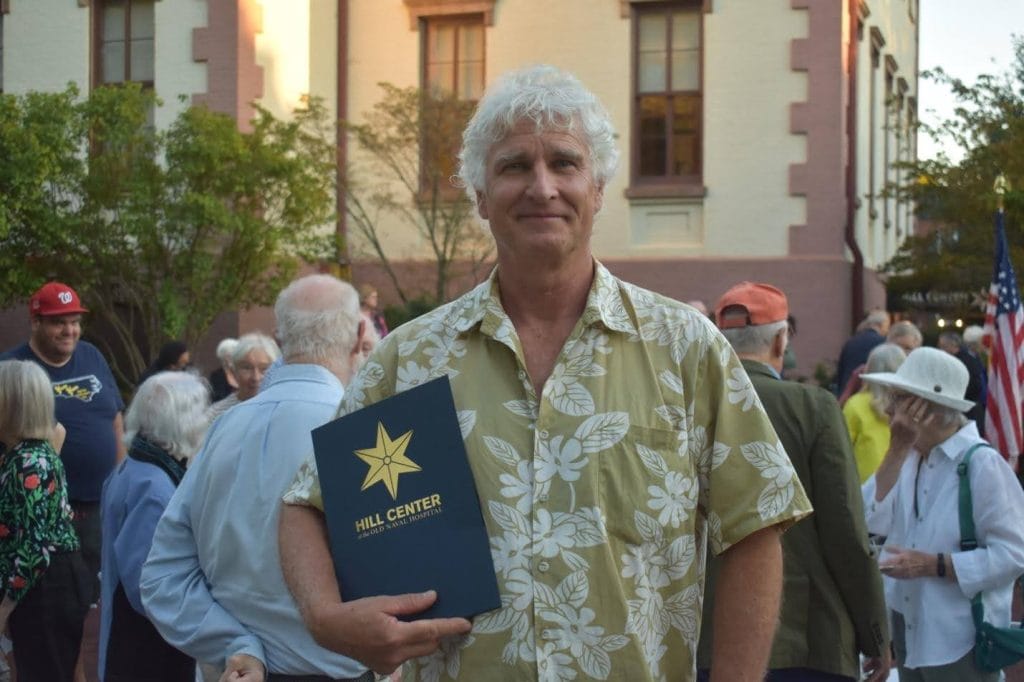
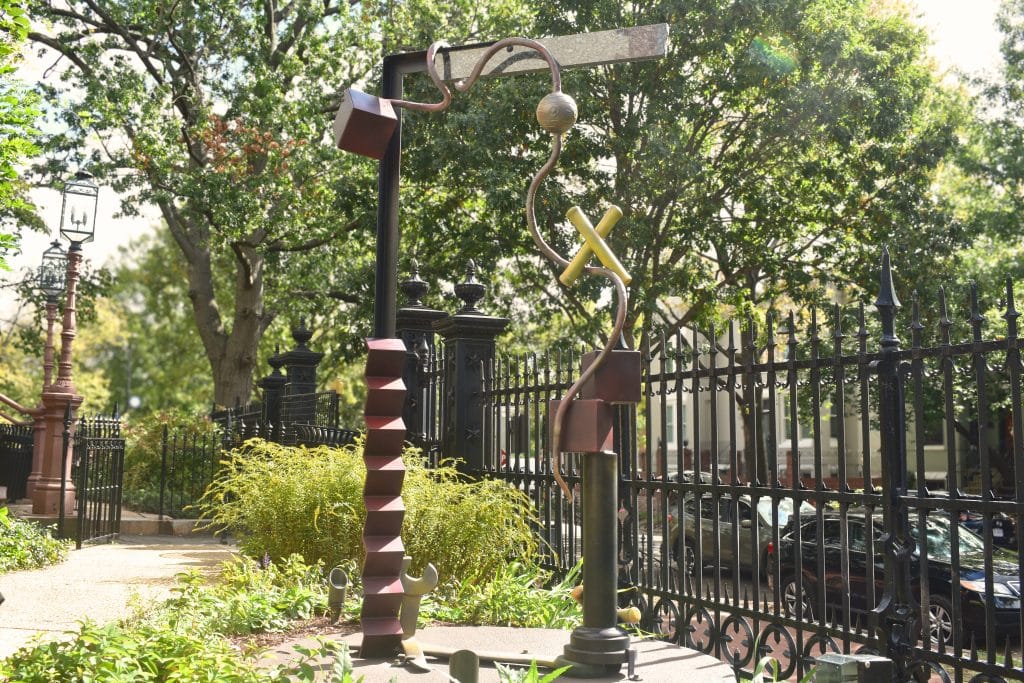
On October 1st, we had our opening reception for the Inaugural Outdoor Sculpture Exhibition. It was juried by Mary Early who is the director of HEMPHILL Artworks, Washington, DC and serves on the board of Washington Sculptors. Luc Fielder (picture below) was given an award for best in show for his sculpture, X & Y.
A few words from Early:
Hill Center’s Inaugural Outdoor Sculpture Exhibition introduces a new forum for sculpture in Washington, DC. In a city full of monumental art in grand public places, artworks nestled in the nature-focused grounds of the Old Naval Hospital meet the scale of the site with a combination of whimsy, respect for nature, and a range of expressive uses of durable materials, including steel, forged iron, and wood.
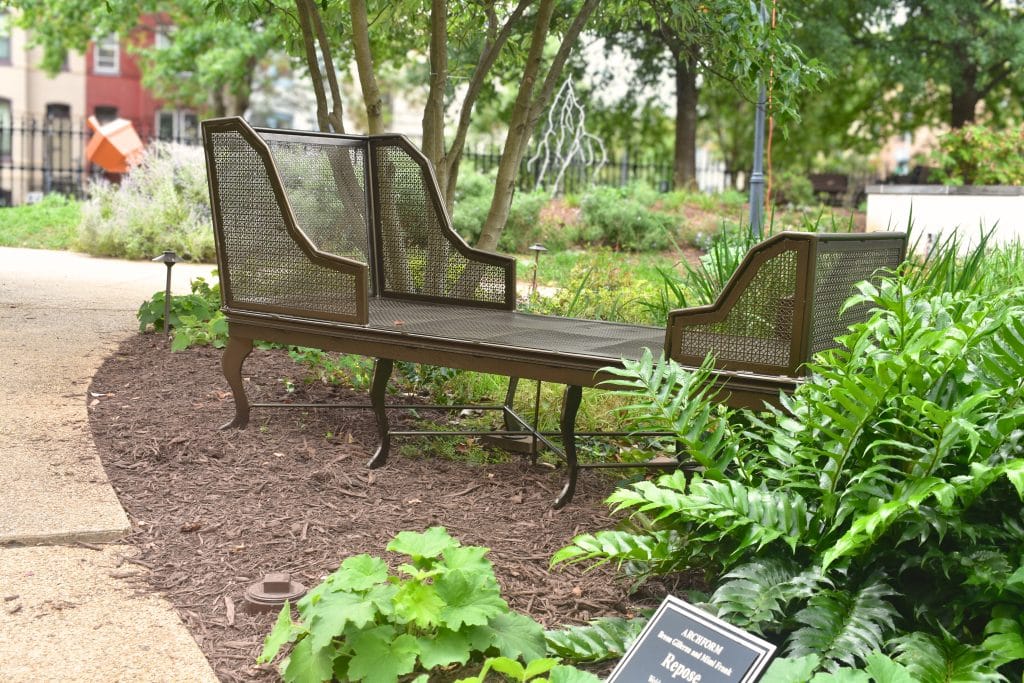
Mimi Frank and Breon Gilleran’s collaborative work, Repose, 2024, presents a traditional object for rest fabricated in welded steel that is quietly reflective in contrast to the rigidity of its materials. The work is situated among the grasses of the rain garden, inviting contemplation and engagement.
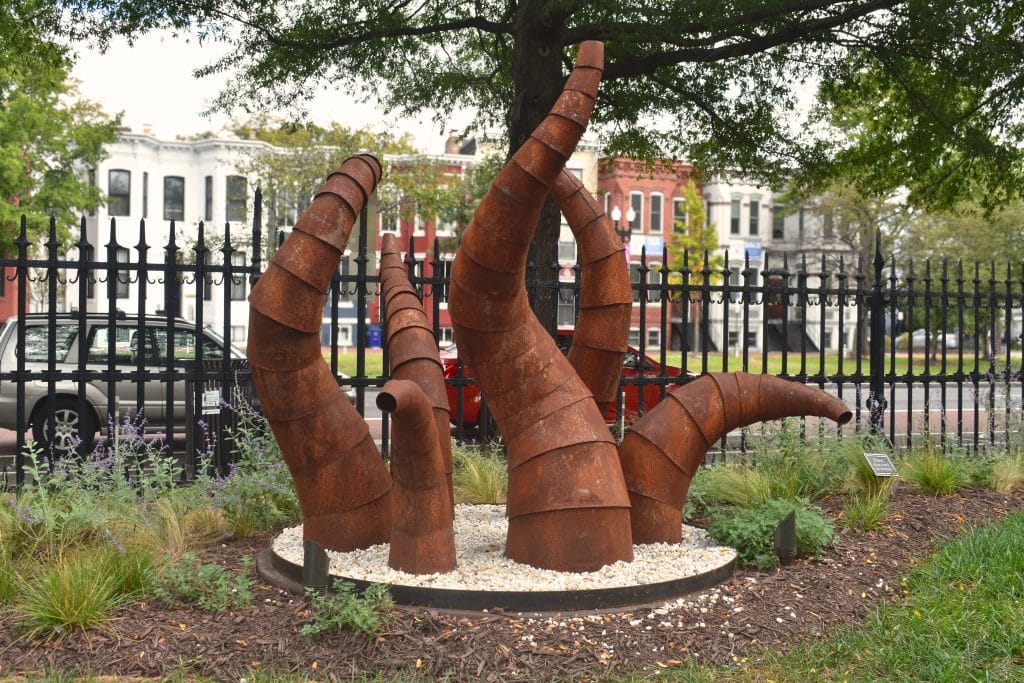
Nicholas Femia’s Searching, 2024, a gathering of individual steel tendrils made of stacked cones, echoes segmented growth in plant forms, each element rising out of the ground as if reaching toward the sky.
X and Why, 2025, Luc Fiedler’s work in forged steel, incorporates stainless steel hardware and polished stone elements, exploring what he calls “the de-evolution of work and construction.”
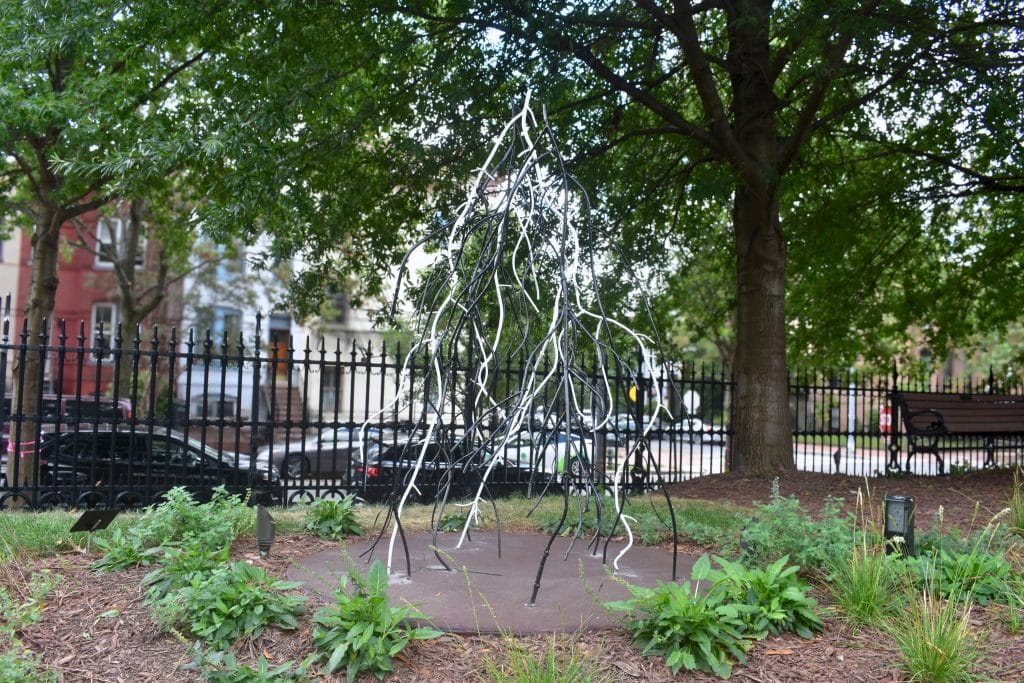
Dalya Luttwak’s Roots in Black and White brings underground root systems above to float in space, with bold painted surfaces illuminating the delicate metalwork in open air.
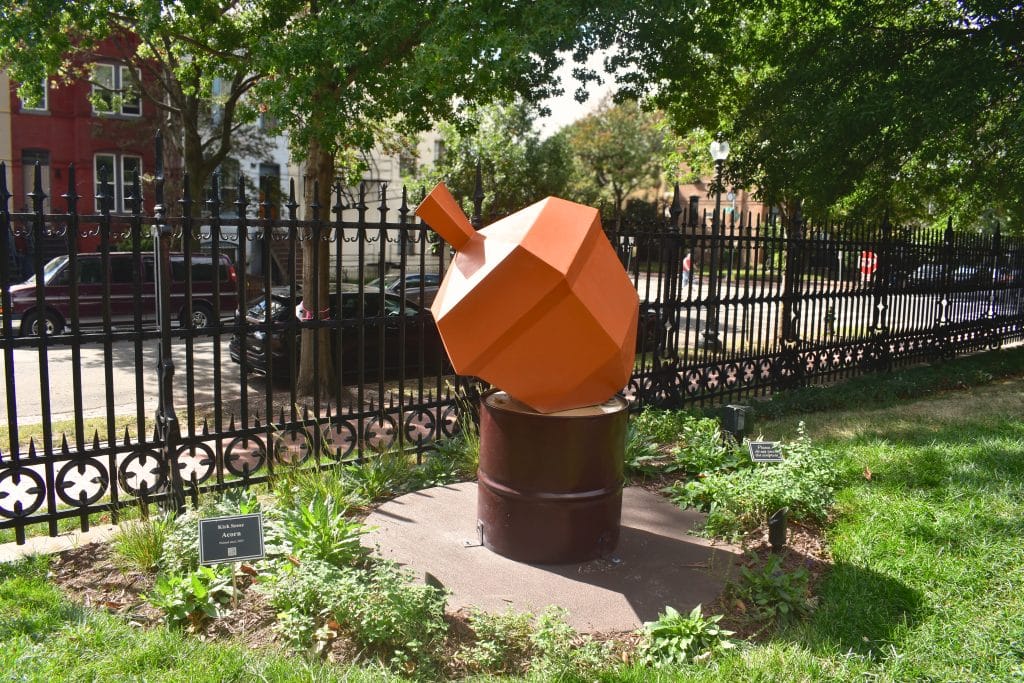
Kirk Seese’s larger-than-life Acorn, 2025, fabricated in plasma cut steel, perches atop a 55 gallon drum, the acorn form contrasting a symbol of nature’s growth with a ubiquitous industrial vessel.
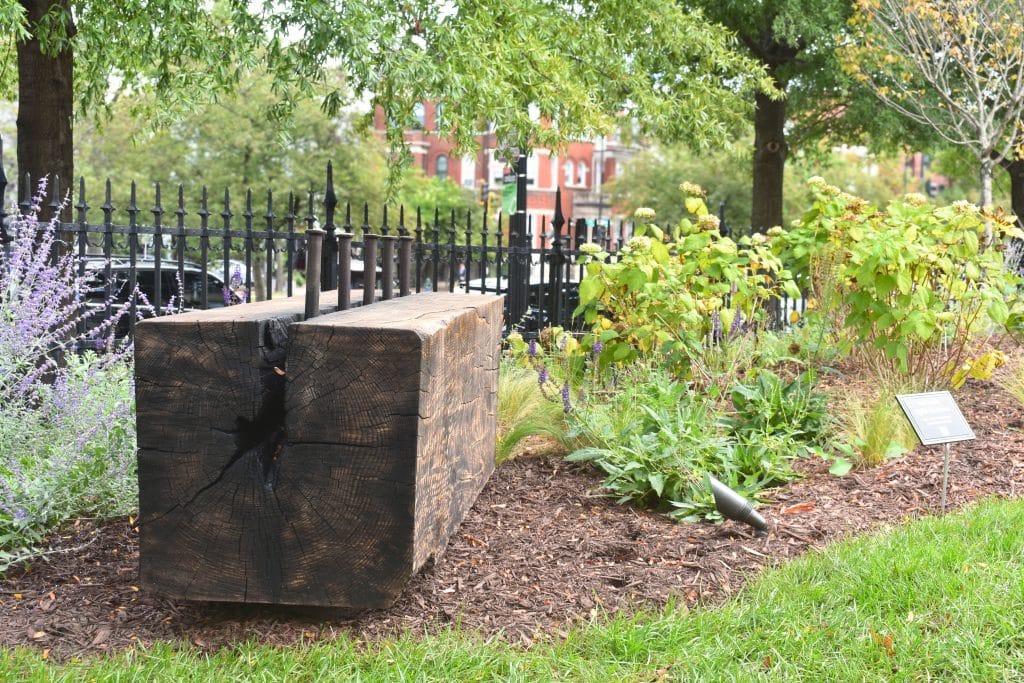
Todd Smith’s Split Decision, 2025, a block of Ash transformed with fire and steel wedges driven through the wood, is a minimal and monolith object calling attention to the resilience of the fallen tree in spite of the destructive effects of the Emerald Ash Borer, an invasive beetle that has affected the majority of Ash trees in the United States.
As digital modeling and fabrication techniques abound in modern sculpture, artists hold a unique responsibility for preserving historical material practices. Many of the works pay homage to Hill Center‘s distinctive nineteenth-century cast-iron fencing with cast, forged, and welded steel, incorporating them into conceptual rather than utilitarian works. These works provide a reflection on nature and the transformation of raw materials while engaging viewers in a tactile and lush outdoor urban setting.
~ Mary Early, September 2025

Related Posts